


The need for modern medicine to extend quality life of a worldwide aging population requires new technologies and models for testing new therapies or devices. Besides performing high quality research the CMCiB develops innovative tools and provides expertise to help researchers and industry users transfer their innovations to the patient or the market.
Success stories
TinyBrains: advancing infant brain monitoring with photonic technology
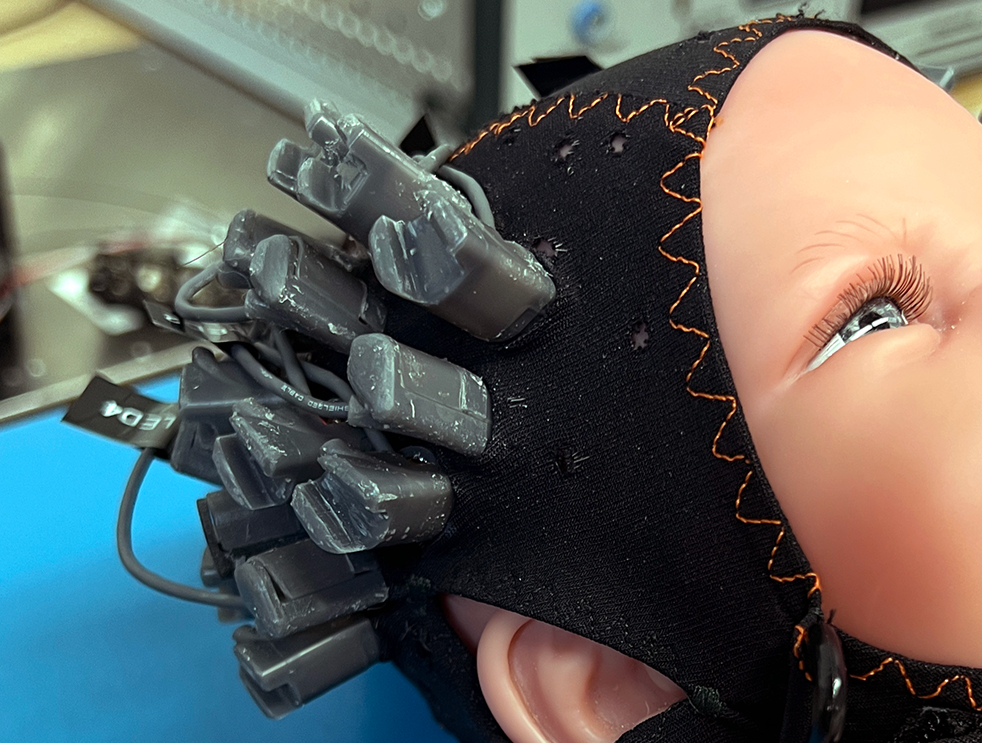
TinyBrains is an EU-funded project by the Horizon 2020 program, coordinated by ICFO - The Institute of Photonic Sciences, that brought together researchers, clinicians, and engineers from across Europe to develop a new non-invasive neuromonitoring platform for newborns with congenital heart defects, and represents a successful example of European collaborative research with strong translational impact.
Congenital heart defects (CHD) are the most common congenital malformations affecting around half a million babies every year. Most of them are severe and often require complex surgeries within their first months of life. Although these surgeries are lifesaving, they carry a significant risk of brain injury due to changes in blood flow and oxygen levels, while current monitoring methods provide limited information.
The TinyBrains project began with the goal of creating an advanced photonics-based neuro-imaging device to understand the mechanisms underlying brain damage in CHD infants. The consortium designed a non-invasive tool by combining two advanced photonics systems (near-infrared spectroscopy (NIRS) and diffuse correlation spectroscopy (DCS)) with a quantitative electroencephalogram and a head-cap. The integration of these signals enables comprehensive monitoring of cerebral hemodynamics, oxygen metabolism, and electrical activity, generating high-quality data to better characterise brain injury mechanisms and to inform the development of therapeutic strategies and clinical management approaches for vulnerable infants.
The preclinical phase of the project was conducted at CMCiB-IGTP, making TinyBrains one of the first European research projects hosted at the centre. The team developed a preclinical model mimicking complex neonatal heart surgery using piglets, a well-established model for studying newborn brain function. These experimental studies have been essential for evaluating the safety, efficacy, and biological mechanisms of the device and provided robust data that supported the progression of the project towards clinical application.
We started our animal model and are now able to complete our experiments efficiently. Getting to know CMCiB and working with the whole team has represented a real paradigm shift for the project. - Dr Joan Sánchez de Toledo, Head of the Pediatric Cardiology Department at the Hospital Sant Joan de Déu and project researcher.
The device was tested in infants undergoing cardiac surgery from the Hospital Sant Joan de Déu (HSJD) and successfully captured dynamic changes in brain oxygenation and electrical activity during different surgical phases. Data collection is currently ongoing at HSJD, where newborns with congenital heart defects are being monitored.
Through innovation, collaboration, and translational research, this project contributes to advancing infant brain health and reinforces CMCIB's position as a centre capable of delivering high-quality preclinical studies with direct translational relevance.
TinyBrains headset. Image credit: ICFO.