


News
A study links the protein HDAC11 as a key factor in muscle deterioration in Duchenne muscular dystrophy
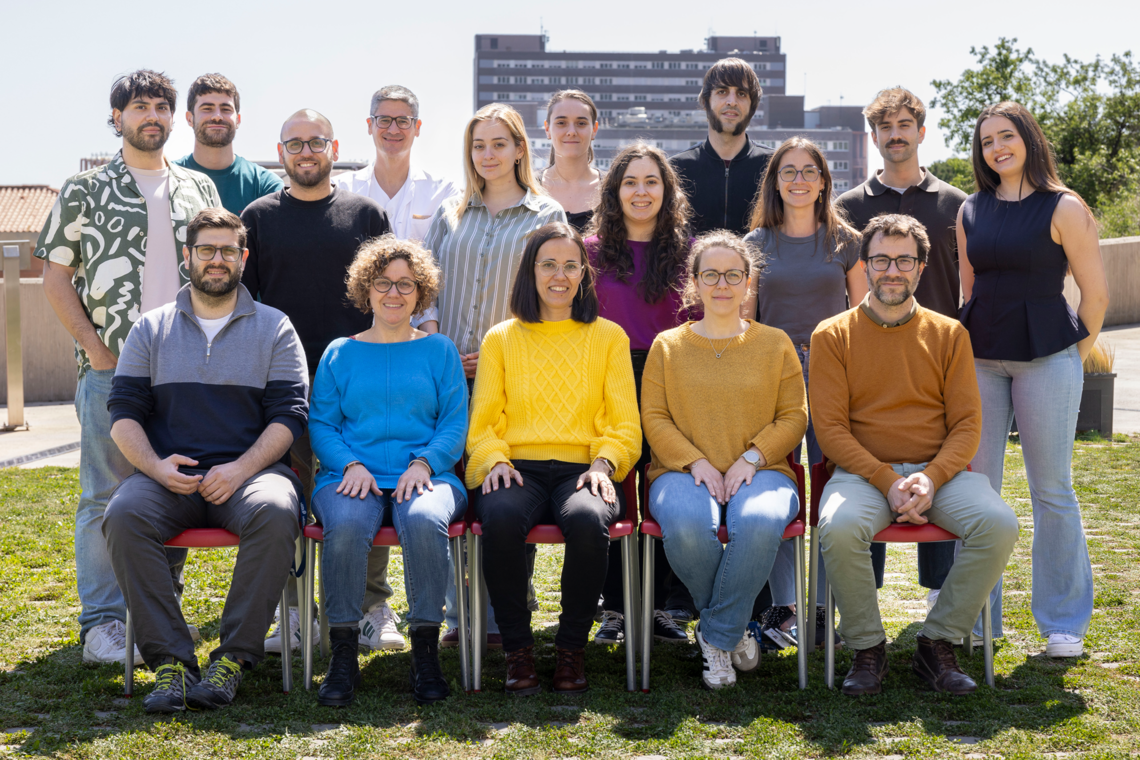
A preclinical study led by the Germans Trias i Pujol Research Institute (IGTP), in collaboration with the Institut de Myologie and the Sant Pau Research Institute, has analysed the role of the protein HDAC11 in Duchenne muscular dystrophy (DMD) and its potential as a therapeutic target. The results of the study have recently been published in the journal Life Sciences.
DMD is a severe genetic disease characterised by progressive muscle degeneration, which manifests in childhood and worsens continuously throughout life. At present, there is no cure, and available therapeutic options are limited, mainly focusing on slowing disease progression and improving patients' quality of life.
The Badalona Neuromuscular Research Group (GRENBA) at IGTP has been working for several years on the study of molecular mechanisms involved in neuromuscular disorders, with the aim of identifying new strategies that could help preserve muscle function. In this context, the researchers had previously described the role of HDAC11 in the loss of muscle function associated with ageing and sarcopenia. Their latest study expands this knowledge and shows that this protein also plays a relevant role in a severe neuromuscular disease such as DMD.
In this work, the team collaborated with researchers from the Heart Failure and Cardiac Regeneration Group (ICREC), the Institut de Myologie and the Sant Pau Research Institute to analyse the effect of total or partial reduction of HDAC11 in a murine model of DMD. The experiments were carried out at the facilities of the Comparative Medicine and Bioimage Centre of Catalonia (CMCiB), a strategic project of IGTP, with its specialised technical support.
Through histological, functional and molecular analyses, the researchers observed a reduction in muscle damage, fibrosis and chronic inflammation, as well as an improvement in muscle strength and endurance, in both young and older dystrophic animals. Overall, these changes contribute to better preservation of muscle structure and to slowing down key processes associated with disease progression. Taken together, the study shows for the first time that genetic reduction of HDAC11 has a broad impact on the dystrophic phenotype in an experimental model of DMD.
The study also focuses on fibro-adipogenic progenitor cells, which are involved in the replacement of muscle tissue with fibrotic tissue. In the absence of HDAC11, these cells show a reduced capacity to generate fibrosis and a greater tendency to undergo apoptosis, limiting their accumulation in dystrophic muscles.
According to Renato Odria, researcher at GRENBA and first author of the article, "the fact that partial reduction of HDAC11 already shows beneficial effects in the DMD model reinforces the biological relevance of this protein in the disease and opens the door to exploring more specific therapeutic strategies".
Along the same lines, Mònica Suelves, co-leader of the research group and principal investigator of the study, points out that "these results suggest that HDAC11 could become a new therapeutic target to reduce the progression of DMD". However, she stresses that "this is a preclinical study, and further research will be needed to determine whether selective inhibition of this protein could translate into safe and effective therapeutic strategies in humans, either as a standalone treatment or in combination with other existing approaches".
Reference
Odria R, Mercado-Amarilla A, Soler-Botija C, Borràs DM, Ohana J, Maestre-Mora P, Bigot A, Suárez-Calvet X, Gallardo E, Nogales-Gadea G, Suelves M. HDAC11 deficiency improves muscle phenotype in a Duchenne muscular dystrophy murine model by reducing inflammation and fibrosis. Life Sci. 2026 Feb 1;386:124150. DOI: 10.1016/j.lfs.2025.124150.
Funding
This work was supported by Ministerio de Economía y Competitividad (BFU2016-80748 to M.S.), Ministerio de Ciencia, Innovación y Universidades (PID2020-118730RB-I00 to M.S.), Instituto de Salud Carlos III (PI22/00104 to G.N-G), AFM-Telethon (23557 project to M.S.) and Feder funds.