


The need for modern medicine to extend quality life of a worldwide aging population requires new technologies and models for testing new therapies or devices. Besides performing high quality research the CMCiB develops innovative tools and provides expertise to help researchers and industry users transfer their innovations to the patient or the market.
Success stories
New tool automates behavioural analysis to support standardisation in preclinical stroke research
The establishment of reliable and reproducible animal models of stroke remains essential for investigating the pathophysiology of the disease and evaluating potential therapeutic approaches. Standardised methods are needed to improve the robustness and reproducibility of preclinical studies and facilitate the translation of promising findings into clinical practice.
A new tool named 'PIG-MENT', developed by the company Mecexis at the request of the Cellular and Molecular Neurobiology (CMN) research group at Germans Trias i Pujol Research Institute (IGTP), has shown potential to provide objective animal behavioural metrics, automate processes that are traditionally manual, time-consuming and observer-dependent, and generate structured data for subsequent statistical analysis.
The group, led by Dr Teresa Gasull, studies the neurological mechanisms operating in stroke and new therapeutic strategies in porcine preclinical models at the Comparative Medicine and Bioimage Centre of Catalonia (CMCiB). Researchers analyse changes in animal behaviour over time following an intervention and assess whether the treatments under study influence these changes compared with the control group. Traditionally, this involved reviewing hours of video recordings and manually scoring behavioural parameters, a time-consuming process that could also be influenced by observer interpretation.
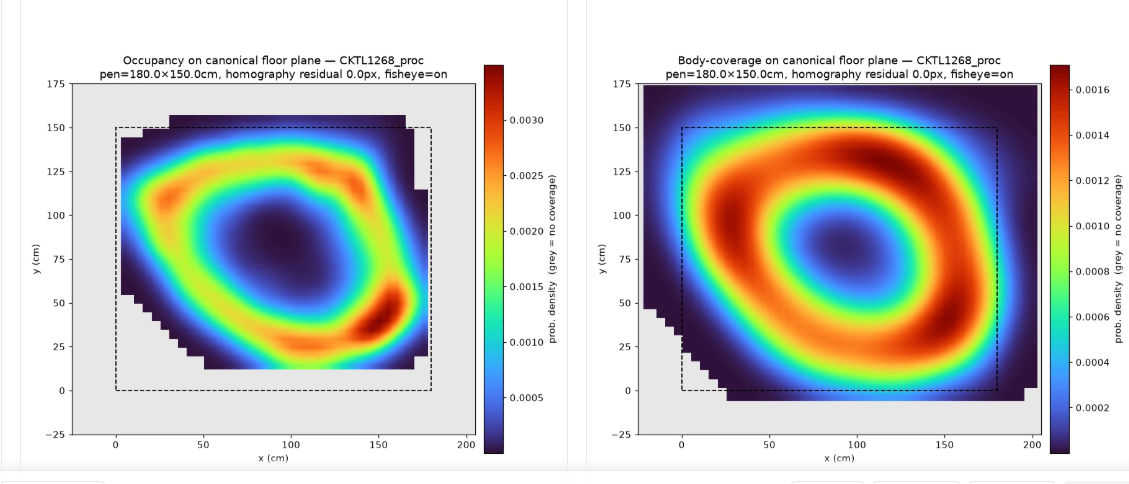
With PIG-MENT, recordings are automatically analysed using computer vision algorithms and converted within minutes into quantifiable, comparable behavioural metrics that can be accessed, reviewed and managed by the researchers through a web application. The system uses computer vision including colour segmentation, shape measurement and geometric correction to quantify a range of behavioural parameters, such as where the animal spends most of its time, how long it rests, how often it turns to either side, the angle of each turn and whether there is a directional bias. Capturing all these parameters consistently through manual assessment alone can be challenging, while the automated approach supports more objective and standardised measurements.
At this stage, PIG-MENT provides a proof of concept for a more automated and objective approach to behavioural assessment in preclinical stroke research. Its potential adaptation to other facilities and experimental setups could support greater comparability and standardisation across studies. In addition, the tool has been developed using open-source technologies, which may facilitate future technical adaptations.
This project highlights how CMCiB's preclinical infrastructure and experimental capabilities can provide a valuable setting for developing and validating innovative technologies, while bringing together complementary expertise from the research and technology teams.